

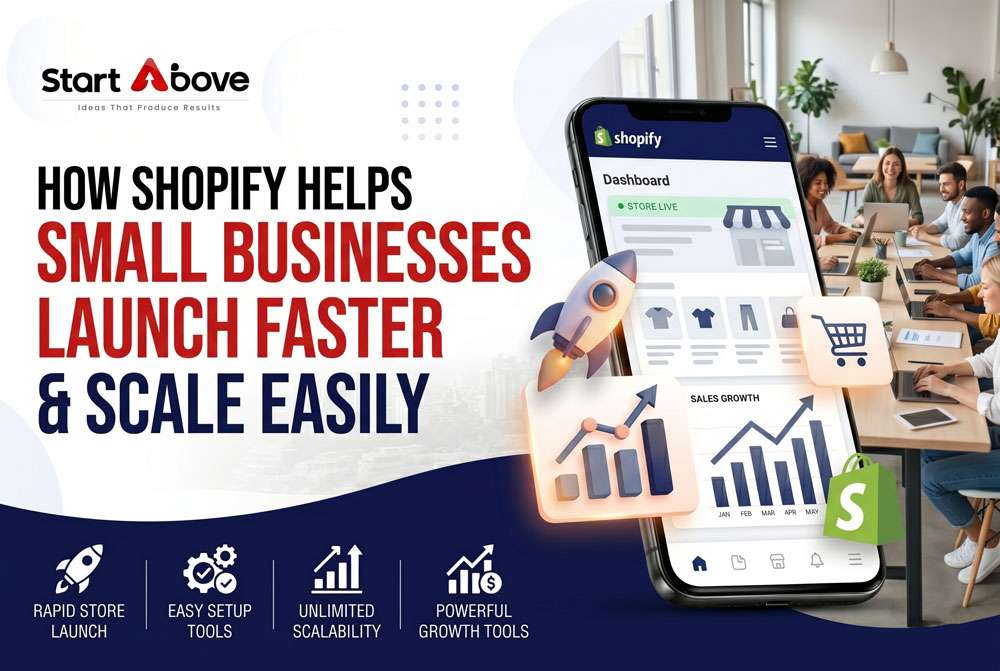
Launching an ecommerce business today is easier than ever, but building a store that can actually grow with the business is where many brands struggle. Small businesses often face delays in website development, technical maintenance issues, poor mobile experiences, and platforms that become difficult to manage as operations expand.
For growing brands, speed and scalability matter just as much as design. Businesses need ecommerce solutions that are easy to manage, quick to launch, and capable of supporting long-term growth without constant technical complications.
This is one of the main reasons many startups, D2C brands, and small businesses are increasingly choosing Shopify for their ecommerce websites.
Why Small Businesses Need Fast and Flexible Ecommerce Solutions
The ecommerce market has become highly competitive. Customers expect smooth shopping experiences, fast-loading websites, secure payment systems, and mobile-friendly browsing from the very beginning.
At the same time, many small businesses do not have large in-house technical teams. Spending months on custom website development or managing complicated backend systems can slow down growth and increase operational stress.
Modern ecommerce businesses need platforms that allow them to:
- launch quickly
- manage products easily
- support online payments
- handle increasing traffic
- scale without rebuilding the entire website
This is where Shopify has become a preferred choice for many growing brands.
Faster Website Launch Compared to Traditional Ecommerce Development
One of Shopify’s biggest advantages is speed.
Traditional ecommerce development can often involve lengthy setup processes, custom coding requirements, hosting configurations, and ongoing maintenance challenges. For small businesses trying to enter the market quickly, these delays can become expensive.
Shopify simplifies much of this process by providing a ready ecommerce infrastructure. Businesses can launch stores faster without dealing with multiple technical dependencies.
This allows founders and business owners to focus more on:
- products
- branding
- marketing
- customer acquisition
instead of spending excessive time managing technical issues.
For many startups, this faster launch cycle becomes a major competitive advantage.
Easy Store Management for Growing Businesses
As businesses grow, managing an ecommerce website can become increasingly complicated.
Inventory updates, order tracking, discount management, product uploads, payment settings, and customer communication all require ongoing attention. Small businesses often struggle when platforms become too technical or difficult to maintain.
Shopify is widely preferred because it offers a comparatively simple and user-friendly management system.
Business owners can manage:
- products
- collections
- orders
- inventory
- offers
- customer data
without requiring deep technical expertise.
This operational simplicity helps businesses reduce dependency on constant developer support for basic daily tasks.
Mobile Shopping Experience Matters More Than Ever
A large percentage of ecommerce traffic now comes from mobile devices. Customers expect websites to load quickly and provide smooth browsing and checkout experiences across smartphones and tablets.
Poor mobile experiences often lead to:
- higher bounce rates
- abandoned carts
- lower conversions
- reduced customer trust
Many Shopify themes are designed with mobile responsiveness in mind, helping businesses create smoother shopping experiences for mobile users.
For growing ecommerce brands, this becomes especially important because mobile-friendly websites not only improve user experience but also support SEO performance and conversion rates.
Shopify Supports Business Growth Without Major Technical Changes
One of the biggest challenges businesses face is scalability.
A website that works for a small catalog may struggle once the business starts expanding products, marketing campaigns, payment systems, or customer traffic.
Many businesses eventually require:
- marketing integrations
- analytics tools
- automation
- email marketing
- advanced reporting
- third-party app integrations
Shopify allows brands to scale operations more smoothly without needing to rebuild the website infrastructure repeatedly.
This flexibility is one reason many D2C and modern ecommerce businesses prefer Shopify while planning long-term growth.
Why Many Modern Brands Prefer Shopify
Over the last few years, Shopify has become popular among startups and D2C brands because it balances simplicity with scalability.
Businesses today want ecommerce platforms that help them:
- launch faster
- test products quickly
- manage operations efficiently
- support online marketing
- improve customer experience
Instead of spending excessive time solving backend issues, brands prefer focusing on:
- sales growth
- performance marketing
- customer retention
- brand building
For many small businesses, Shopify provides a more practical path toward ecommerce growth compared to overly complex development approaches.
Professional Shopify Development Still Makes a Big Difference
Although Shopify simplifies ecommerce setup, professional development and optimization still play an important role in business performance.
A professionally developed Shopify website helps businesses improve:
- branding consistency
- website structure
- conversion flow
- page speed
- mobile experience
- SEO readiness
- customer trust
Many businesses use basic templates without considering performance optimization or user experience, which can limit growth potential later.
A strategically developed ecommerce website creates a smoother customer journey and supports long-term scalability more effectively.
Businesses planning serious ecommerce growth often benefit from working with experienced ecommerce development professionals who understand both technical implementation and business strategy.
For brands looking to build scalable ecommerce websites, professional ecommerce development services in Pune can help create platforms optimized for performance, usability, and long-term growth.
Common Mistakes Businesses Make While Launching Shopify Stores
Many businesses assume launching an ecommerce store is only about choosing a platform. In reality, several strategic mistakes can affect performance even when using good ecommerce systems.
Some common issues include:
- choosing poorly optimized themes
- ignoring SEO setup
- uploading unoptimized images
- using excessive apps that slow down performance
- creating complicated checkout experiences
- neglecting mobile optimization
These problems often impact customer experience and conversion rates.
A well-planned Shopify store should focus not only on appearance but also on usability, speed, and operational efficiency.
Frequently Asked Questions
Yes, Shopify is widely used by small businesses because it simplifies ecommerce management while supporting future growth and scalability.
Startups often prefer Shopify because it allows faster website launches, easier management, integrated payment systems, and scalable ecommerce operations.
Shopify is designed to support growing businesses through app integrations, marketing tools, inventory management, analytics, and scalable ecommerce infrastructure.
It depends on business requirements. Shopify is often preferred by small and medium businesses because it reduces technical complexity and speeds up deployment.
Yes, Shopify supports ecommerce SEO features such as customizable meta tags, mobile optimization, product indexing, and structured website architecture.
Final Thoughts
For small businesses and growing ecommerce brands, choosing the right platform can significantly impact operational efficiency and long-term scalability.
Shopify has become a preferred ecommerce solution because it helps businesses launch faster, simplify store management, improve mobile shopping experiences, and scale operations more efficiently.
However, successful ecommerce growth depends not only on choosing the right platform but also on building a well-optimized website that supports customer experience, branding, and business goals.
As ecommerce competition continues to increase, businesses that focus on scalable and performance-oriented ecommerce development are more likely to build stronger online brands and sustainable growth.