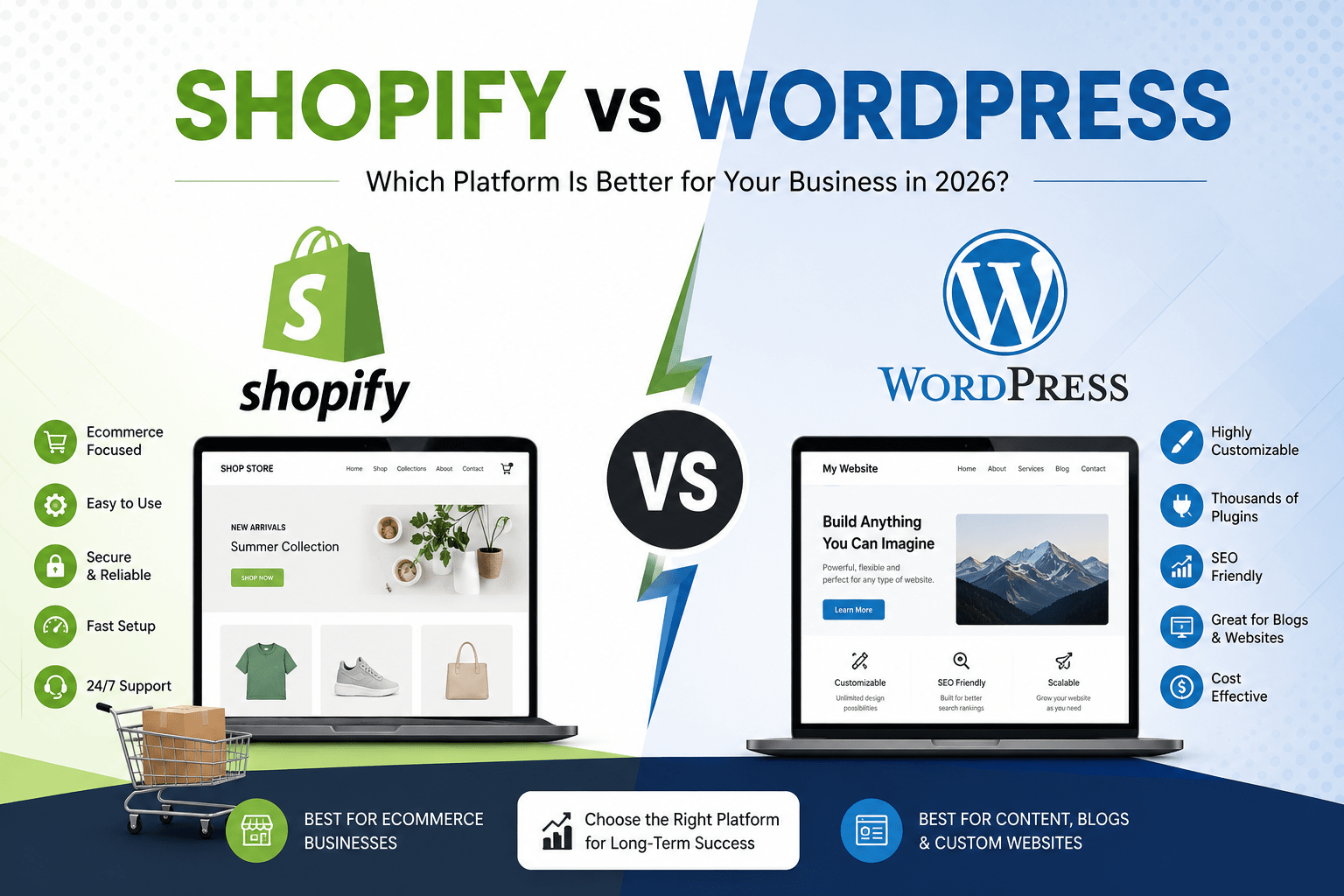

Choosing the right platform is one of the most important decisions for any business planning to build a professional website or ecommerce store.
Two of the most popular platforms in 2026 are Shopify and WordPress. Both platforms offer powerful features, but they serve different business needs.
If you are confused about which platform is right for your business, this guide will help you understand the major differences between Shopify vs WordPress and choose the best solution for long-term growth.
What Is Shopify?
Shopify is a dedicated ecommerce platform designed specifically for online stores.
It provides everything required to run an ecommerce business, including:
- Website Hosting
- Payment Gateway Integration
- Product Management
- Order Management
- Inventory Tracking
- Mobile Responsive Themes
- Security & Maintenance
Shopify is known for its simplicity, speed, and user-friendly interface.
What Is WordPress?
WordPress is a popular content management system (CMS) used for blogs, business websites, and ecommerce stores.
For ecommerce functionality, WordPress typically uses:
- WooCommerce Plugin
- Third-party Hosting
- Additional Plugins
- Custom Development
WordPress offers more flexibility and customization options compared to Shopify.
Shopify vs WordPress – Major Differences
1. Ease of Use
Shopify
Shopify is beginner-friendly and easy to set up.
You can quickly:
- Add products
- Manage orders
- Customize themes
- Accept payments
without technical knowledge.
WordPress
WordPress has a learning curve.
Users need to manage:
- Hosting
- Plugins
- Security
- Updates
- Backups
It provides flexibility but requires more technical understanding.
2. Ecommerce Features
Shopify
Shopify is built specifically for ecommerce.
It includes:
- Inventory Management
- Shipping Integration
- Secure Checkout
- Abandoned Cart Recovery
- Payment Gateways
- Product Variants
Everything is optimized for online selling.
WordPress
WordPress requires plugins like WooCommerce to create an ecommerce store.
While powerful, additional setup and plugin management are necessary.
3. Customization Flexibility
Shopify
Shopify provides professional themes and customization options, but advanced customization may require coding knowledge.
WordPress
WordPress offers unlimited customization possibilities.
Businesses can fully customize:
- Website Design
- Features
- Layouts
- SEO Structure
- User Experience
This makes WordPress highly flexible.
4. SEO Performance
Shopify SEO
Shopify offers built-in SEO features including:
- Meta Titles
- Meta Descriptions
- Mobile Optimization
- SSL Security
- Fast Loading Speed
It works well for ecommerce SEO.
WordPress SEO
WordPress is considered highly SEO-friendly because of plugins like:
- Rank Math SEO
- Yoast SEO
Businesses get complete control over SEO optimization.
For advanced SEO strategies, WordPress often provides greater flexibility.
5. Website Speed and Performance
Shopify
Shopify handles hosting and optimization automatically.
This ensures:
- Fast loading speed
- Better uptime
- Improved security
WordPress
Website speed depends on:
- Hosting quality
- Plugins
- Theme optimization
Poor optimization can affect performance.
6. Security and Maintenance
Shopify
Shopify manages:
- Security
- SSL certificates
- Hosting
- Backups
- Updates
making it highly secure and low maintenance.
WordPress
WordPress requires manual management for:
- Security plugins
- Backups
- Updates
- Malware protection
Regular maintenance is essential.
7. Pricing Comparison
Shopify Pricing
Shopify works on monthly subscription plans.
Costs include:
- Monthly subscription
- Paid themes
- Apps
- Transaction fees
WordPress Pricing
WordPress itself is free, but businesses pay for:
- Hosting
- Domain
- Premium themes
- Plugins
- Developer support
Total costs vary depending on customization needs.
Which Platform Is Better for Ecommerce?
Choose Shopify If You Want:
- Easy store management
- Fast setup
- Secure ecommerce solution
- Minimal technical work
- Quick online selling
- Professional ecommerce features
Shopify is ideal for:
- Fashion Brands
- Jewelry Stores
- Beauty Products
- Small Ecommerce Businesses
- Dropshipping Stores
Choose WordPress If You Want:
- Complete customization
- Advanced SEO control
- Blogging capabilities
- Flexible website structure
- Custom business websites
WordPress is ideal for:
- Service-based Businesses
- Bloggers
- Portfolio Websites
- Large Content Websites
- Businesses needing custom functionality
Shopify vs WordPress – Which Is Better in 2026?
There is no single perfect platform.
The best choice depends on your business goals.
If your primary focus is ecommerce and simplicity, Shopify is often the better option.
If you want advanced customization and complete SEO control, WordPress can be more powerful.
Many businesses today prefer Shopify for ecommerce stores because of its simplicity, security, and faster management.
Why Choose Start Above LLP for Ecommerce Website Development?
At Start Above LLP, we help businesses build professional ecommerce and business websites using both Shopify and WordPress.
Our services include:
- Shopify Website Development
- WordPress Website Development
- Ecommerce Website Design
- SEO Optimization
- Mobile Responsive Design
- Website Speed Optimization
- Payment Gateway Integration
- Custom Website Development
We help businesses choose the right platform based on their goals, budget, and future growth plans.
Conclusion
Both Shopify and WordPress are excellent platforms in 2026.
Shopify is best for businesses looking for an easy-to-manage ecommerce solution, while WordPress is ideal for businesses needing advanced customization and flexibility.
Before choosing a platform, consider:
- Your business type
- Budget
- Technical requirements
- SEO goals
- Scalability needs
Choosing the right platform can significantly impact your business growth and online success.