
Many business owners planning their online presence often ask the same question: Should I invest in a complete business website or just create a landing page?
The answer depends on your business goals. While both help establish an online presence, they serve very different purposes. A business website is designed to showcase your brand, services, and expertise over the long term, whereas a landing page is built to achieve one specific objective, such as generating leads or promoting a campaign.
Choosing the right option can significantly impact your marketing results, customer experience, and return on investment. In this guide, we’ll explain the differences, when to use each, and how businesses can benefit from using both strategically.
What Is a Business Website?
A business website is your company’s digital headquarters. It provides customers with comprehensive information about your business, helping them understand who you are, what you offer, and why they should choose you.
A typical business website includes multiple pages such as:
- Home
- About Us
- Services
- Products
- Portfolio
- Blog
- Contact Us
Unlike a single-page marketing asset, a website is built to support long-term business growth through branding, SEO, and customer engagement. For many businesses, the website becomes the foundation of their digital marketing strategy.
What Is a Landing Page?
A landing page is a standalone web page created with a single marketing objective.
Instead of encouraging visitors to browse multiple pages, it focuses their attention on one specific action, such as:
- Requesting a quote
- Booking a consultation
- Downloading a brochure
- Registering for an event
- Purchasing a product
Landing pages are commonly used with Google Ads, Meta Ads, email marketing campaigns, and product launches because they remove distractions and encourage higher conversion rates.
Business Website vs. Landing Page: Understanding the Difference
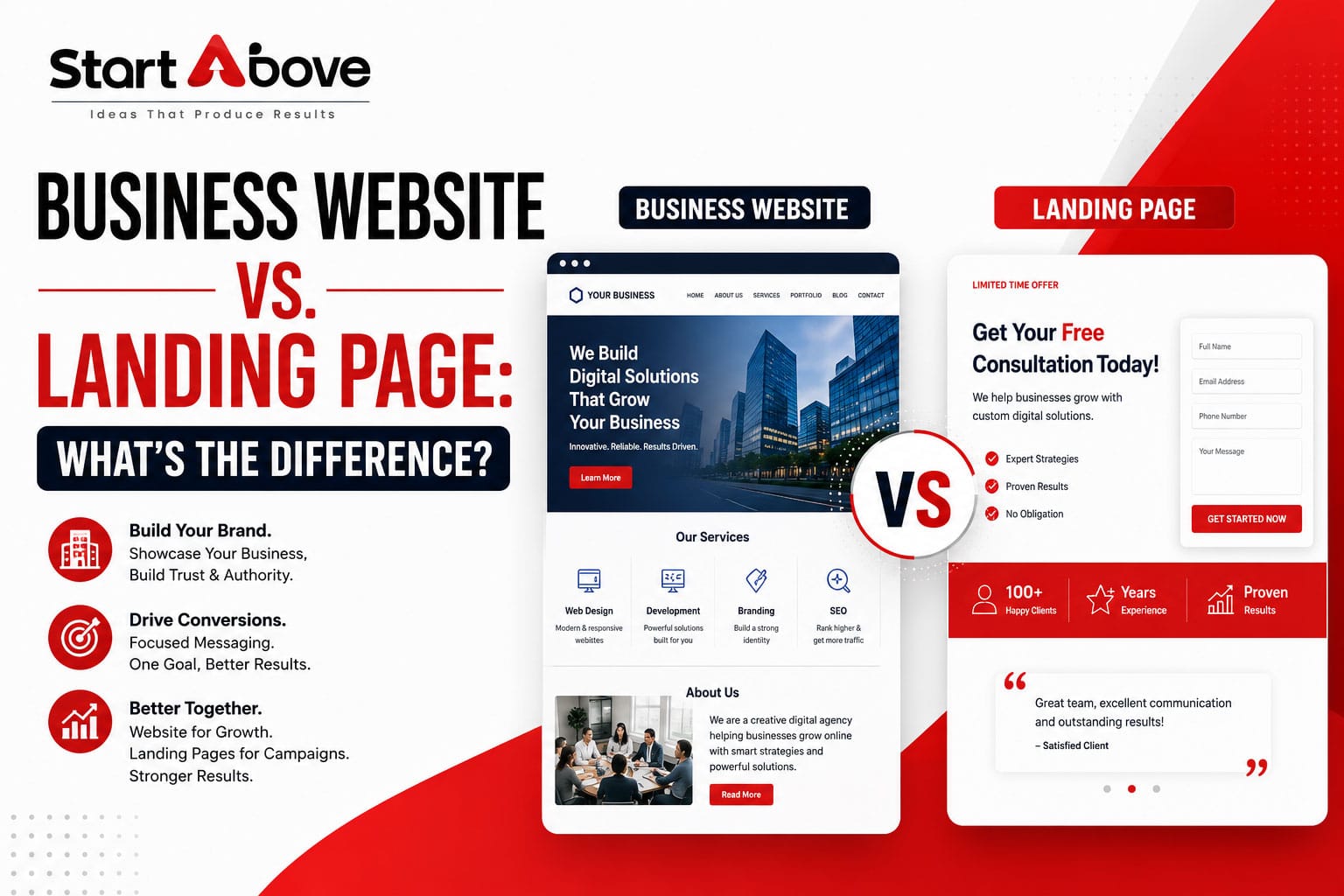
Although both exist online, they are designed for different purposes. A business website focuses on building trust and providing complete information about your company. Visitors can explore different pages, learn about your services, read blogs, view your portfolio, and contact your team.
A landing page, on the other hand, is designed around one conversion goal. It contains focused messaging, a strong call-to-action, and minimal navigation so visitors stay focused on completing the desired action.
Think of it this way:
Your website builds your brand.
Your landing page drives a specific campaign.
Businesses that understand this distinction often achieve better marketing performance because each asset supports a different stage of the customer journey.
When Does Your Business Need a Website?
A business website is the right choice when your goal is to establish a professional online presence and support long-term growth.
A website is ideal if you want to:
- Build brand credibility
- Rank on Google through SEO
- Showcase multiple services
- Publish educational blogs
- Display case studies and testimonials
- Help customers learn about your business
For companies investing in SEO, content marketing, or long-term lead generation, a professional website is essential because it provides the structure needed for search engines to understand and rank your business.
When Should You Use a Landing Page?
Landing pages work best when you want visitors to complete one specific action.
They are especially effective for:
- Google Ads campaigns
- Facebook and Instagram advertising
- Product launches
- Seasonal promotions
- Webinar registrations
- Lead generation campaigns
Because landing pages eliminate unnecessary navigation, they often achieve higher conversion rates than standard website pages when used for paid marketing campaigns. However, landing pages are not designed to replace a complete business website.
Can Businesses Use Both?
Absolutely. In fact, many successful businesses use both websites and landing pages together.
For example, your website may attract visitors through SEO, blogs, and organic search, while dedicated landing pages are created for advertising campaigns that target specific products or services.
Imagine a digital marketing agency. Its website explains services such as SEO, website development, branding, and social media marketing.
At the same time, it may create dedicated landing pages for campaigns like:
- SEO Services for Manufacturing Companies
- Shopify Development Company in Pune
- Google Ads Management for Ecommerce Brands
This combination allows businesses to build authority while also maximizing campaign conversions.
Common Mistakes Businesses Make
One common mistake is expecting a single homepage to generate leads from paid advertising.
Visitors clicking on an advertisement usually expect information related to that specific offer. Sending them to a general homepage often creates unnecessary distractions and reduces conversions.
Another mistake is relying only on landing pages without building a complete website. While landing pages can generate leads, they do little to establish long-term credibility, improve SEO, or demonstrate expertise.
Businesses achieve better results when they use websites for long-term visibility and landing pages for focused marketing campaigns.
Which Option Is Right for Your Business?
The answer depends on your objectives. If your priority is building an online brand, improving search visibility, and showcasing your business, invest in a professional website.
If your goal is generating inquiries from a specific advertising campaign or promotion, create a dedicated landing page. For businesses focused on sustainable growth, the best strategy is usually to combine both.
A well-developed website builds trust and authority, while strategically designed landing pages help convert visitors into leads and customers.
Why Professional Development Matters
Whether you’re building a complete business website or a high-converting landing page, success depends on more than good design. Website speed, mobile responsiveness, user experience, SEO structure, clear messaging, and conversion-focused layouts all influence how visitors interact with your business online.
Working with an experienced web development partner helps ensure your digital assets not only look professional but also support your business goals and marketing strategy over the long term.
Frequently Asked Questions
Is a landing page better than a business website?
Not necessarily. A landing page is designed for a specific campaign or conversion goal, while a business website supports branding, SEO, and long-term online visibility. Most businesses benefit from using both.
Can I run Google Ads without a website?
Yes. You can direct Google Ads traffic to a dedicated landing page. However, having a professional website improves credibility and helps customers learn more about your business.
Does a business website help with SEO?
Yes. A business website provides the structure needed for search engines to index your content, rank your service pages, and improve long-term organic visibility.
How many landing pages should a business have?
There is no fixed number. Many businesses create separate landing pages for different services, industries, locations, or marketing campaigns to improve conversion rates.
Should small businesses invest in a website or a landing page first?
If you’re establishing your business online, a professional website is usually the best starting point. Once your website is in place, landing pages can be created to support advertising campaigns and lead generation efforts.
Final Thoughts
A business website and a landing page are not competitors. They are complementary tools that serve different purposes within your digital marketing strategy.
A website helps build trust, strengthen your online presence, and attract long-term organic traffic. A landing page focuses on one objective and is designed to maximize conversions from specific campaigns.
Understanding when to use each allows businesses to make smarter marketing decisions, improve customer experience, and generate better results. Rather than choosing one over the other, businesses that combine a professionally developed website with targeted landing pages are often better positioned for sustainable online growth.