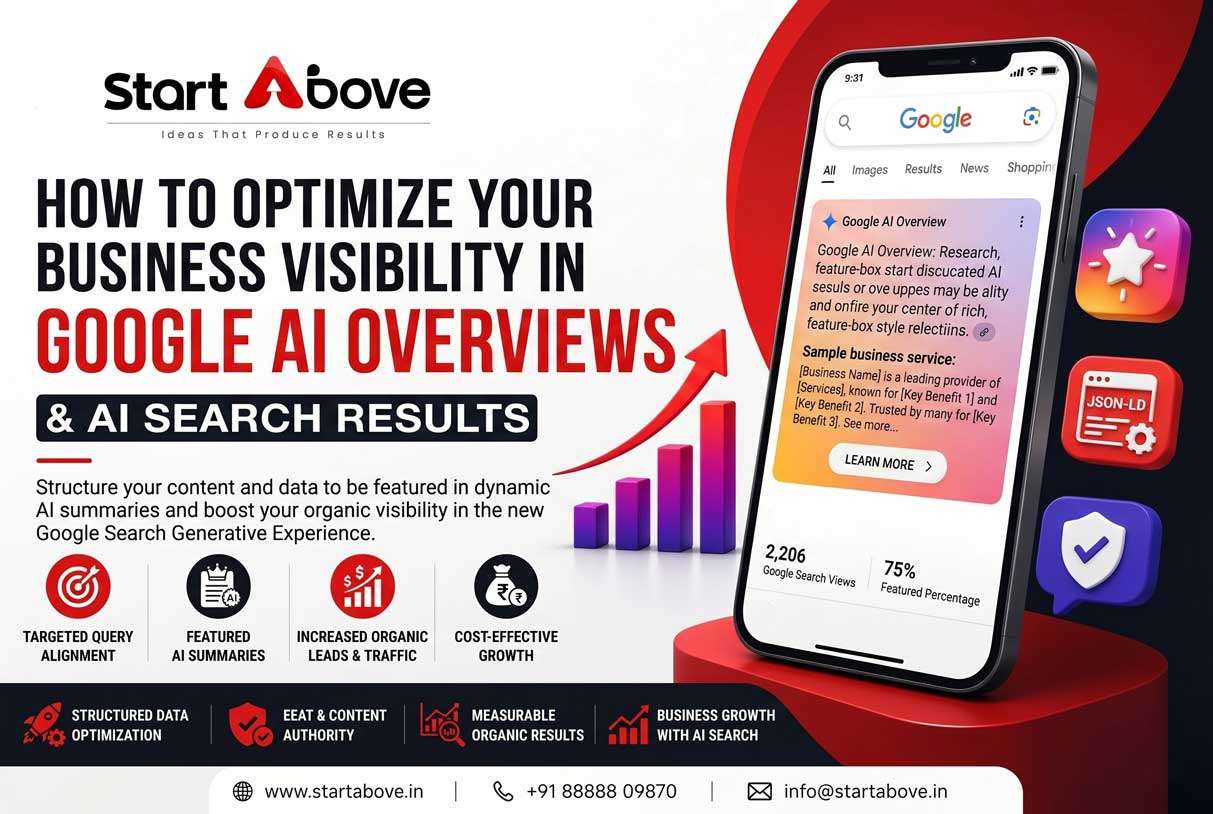

Search is changing rapidly.
For years, companies have worked on bettering their position in the traditional search results. SEO is still very much a thing. But increasingly, users are seeking AI-powered experiences like Google AI Overviews, ChatGPT, Gemini, and Perplexity to find information, compare solutions, and research businesses. The user no longer has to click through multiple websites, but gets summarized answers in the search interfaces. This change is changing the way businesses get seen online.
This is why so many business owners are asking an important question:
“How do I get my business to show up in search results and AI answers?”
The answer is not looking for shortcuts. Not exploiting algorithms. It’s about creating useful, trustworthy, well-organized content that helps users and AI systems understand your expertise.
Why AI Search Is Changing Online Visibility
Traditional search engines generally return a list of links and let users determine which of the websites to visit. AI search experience works differently. They collect information from many sources, process it and produce summarized answers that are likely to answer a user’s question.
For example, a searcher:
- What is the Cost of Ecommerce Website Development?
- What’s the best CRM for small businesses?
- SEO results, how fast does it take?
may get an AI-generated summary ahead of traditional search results.
This means that companies are no longer competing just for rankings. They’re also competing with one another to be trusted providers of information that AI systems find useful enough to cite.
What Makes AI Systems Reference Certain Websites?
A lot of business owners consider AI visibility to be a whole different strategy from SEO. But the fundamentals are still the same.
AI systems are biased towards content that shows:
- Proven expertise.
- Useful information
- High topical relevance
- Authoritative sources
- Well-organized content
- Hands-on Experience
Content that’s just repeating keywords or giving generic information won’t stand out. Companies that publish useful content on a regular basis are more likely to be cited, because they provide more than just basic definitions and advertising.
Create Content That Answers Real Customer Questions
One of the most effective ways to improve AI visibility is to focus on the questions your customers are already asking. Many business websites concentrate heavily on service pages while overlooking educational content that addresses common concerns, challenges, and decision-making factors.
For example, instead of only publishing a page about SEO services, consider creating content around questions such as:
- How long does SEO take for small businesses?
- What should businesses expect from SEO in the first six months?
- Is local SEO worth it for service-based companies?
Similarly, an ecommerce development company could answer questions like:
- Shopify vs WooCommerce: Which platform is right for your business?
- What features should every ecommerce website have?
- How much does it cost to launch an online store?
Question-focused content naturally aligns with how users interact with both search engines and AI tools.
Demonstrate Genuine Expertise
One problem that AI systems have is being able to differentiate generic content from actually useful expertise. Sharing real insights, examples and practical experience is often a stronger signal of authority for businesses.
For instance, rather than writing:
“SEO helps to rank better.
What would be stronger would be:
Many local businesses begin to see increased visibility within three to six months of consistently implementing technical SEO, content optimization, and local SEO efforts.
Vague pronouncements are often worth less than concrete observations and pragmatic insight. You should demonstrate expertise, not just say you have it.
Structure Content for Both Humans and AI Systems
Content should always be created for people first; however, structure matters. Good organization helps readers get answers faster, and helps search engines and AI systems understand the information better.
Good practices are:
- Headings that define
- Logical content pieces
- Brief explanations
- FAQs Sections
- Easy to read
- Layouts that are easy to scan
For example, a well-structured article with relevant headings is easier to understand by both users and AI systems than a huge mass of unorganized text. This is not writing for algorithms. It means making quality information more available.
Build Authority Beyond Your Website
Search experiences powered by AI often pull information from multiple sources instead of a single web page. Overall brand credibility is becoming more important.
Businesses can increase their authority online using:
- Good reviews from customers
- Optimizing your Google Business Profile
- Industry mentions
- Case studies
- Thought leadership material
- Consistent brand presence
When a business is talked about and linked to from multiple trusted sources, it creates stronger credibility signals. Building authority isn’t just about backlinks anymore. It increasingly matters how consistent a company’s web presence is in expertise.
Why Traditional SEO Still Matters
One of the biggest misconceptions surrounding AI search is that SEO is becoming irrelevant. In reality, AI visibility is built on many of the same foundations that support strong SEO performance.
Search engines and AI systems still rely on websites that are:
- Crawlable
- Well-structured
- Technically sound
- Content-rich
- Relevant to user intent
Businesses that neglect SEO fundamentals often struggle to build visibility in both traditional search results and AI-generated experiences. Rather than replacing SEO, AI search is reinforcing the importance of quality content and strong website foundations.
Common Mistakes Businesses Make
With AI in the spotlight, many businesses are jumping to create content without a strategy. A common mistake is publishing tons of generic AI-generated articles that don’t provide much new value. Another problem is that content is being produced based solely on keywords rather than user intent.
Businesses also often overlook expertise. In crowded fields, content that lacks tangible takeaways, examples or context in the real world can find it difficult to make a splash. Brands that will benefit the most from AI-powered search are those that focus on helping users, not chasing algorithms.
How Businesses Can Prepare for the Future of AI Search
The winners in AI-powered search won’t necessarily be the businesses generating the most content. They’ll be the companies making the most valuable content instead.
A good strategy must focus on:
- Customer questions acknowledged .
- Publishing professional perspectives
- Increasing content quality
- Establishing topical authority
- Managing reputations online
- Following technical SEO best practices
As AI search continues to evolve, businesses that consistently deliver valuable information will be in a better position to earn visibility across multiple search experiences.
Frequently Asked Questions
What are Google AI Overviews?
Google AI Overviews are AI-generated summaries that appear within search results to help users find quick answers to their questions.
Can businesses rank in ChatGPT answers?
There is no direct way to rank in ChatGPT. However, businesses that publish helpful, authoritative, and well-structured content may be more likely to be referenced by AI systems.
Is AI SEO different from traditional SEO?
AI visibility builds upon many traditional SEO principles including content quality, technical SEO, topical authority, and user-focused information.
How do AI search engines choose sources?
AI systems typically look for trustworthy, relevant, and well-structured information from sources that demonstrate expertise and authority.
Does blogging help improve AI visibility?
Yes. High-quality blog content that answers real customer questions can help businesses build authority and increase their chances of appearing in AI-powered search experiences.
Final Thoughts
AI-powered search is changing the way people get information on the web, but the guiding principle remains constant: produce content that genuinely benefits people. Companies that focus on expertise, clarity and customer value tend to get visibility across traditional search engines, Google AI Overviews and new AI-led platforms.
The way to succeed is not by taking shortcuts with AI alone, but by becoming trusted sources of information in your business. The future of search belongs to brands that constantly educate, inform and solve problems for their audience.