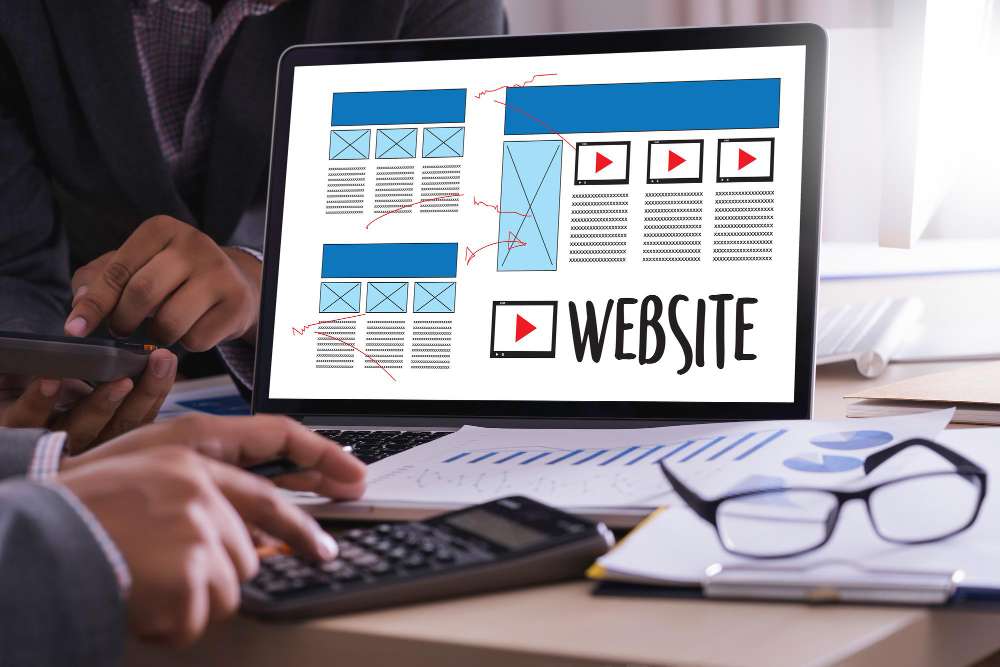

A website redesign is necessary when your current website fails to generate leads, ranks poorly on search engines, delivers a weak user experience, or limits business growth. A strategic redesign improves conversions, SEO performance, and overall digital effectiveness.
What is a Website Redesign?
A website redesign is a performance-focused rebuild of your website aimed at improving:
- Conversion rates
- User experience (UX)
- Search engine visibility (SEO)
- Speed and technical performance
- Content structure and clarity
It is not just a visual update. It is a business-driven optimization of how your website functions and converts.
When Should You Redesign Your Website?
You should consider a website redesign if you experience any of the following:
1. Low Conversions Despite Traffic
If users visit your site but do not take action, the issue is usually poor structure, messaging, or calls to action.
2. Outdated Design and User Experience
An outdated interface reduces trust and makes your business appear less credible.
3. Poor Mobile Performance
A non-optimized mobile experience leads to higher bounce rates and lost opportunities.
4. Slow Website Speed
Slow loading pages reduce engagement and negatively impact search rankings.
5. Weak SEO Performance
If your website is not ranking, it likely has structural SEO issues such as poor architecture or missing optimization.
6. Difficult Content Management
If updating content is slow or developer-dependent, your website limits operational efficiency.
Why Website Redesign Matters
A website redesign directly impacts business growth by improving key performance areas.
1. Higher Conversion Rates
Clear messaging, better layout, and optimized CTAs increase lead generation from existing traffic.
2. Improved User Experience
Better navigation and structure reduce friction and help users take action faster.
3. Stronger SEO Foundation
A redesign improves site structure, speed, and mobile usability, which are essential for rankings.
4. Better Integration with Marketing Tools
Modern websites support CRM systems, analytics, and automation tools for better performance tracking.
5. Improved Security and Stability
Updated frameworks reduce security risks and ensure long-term reliability.
Before vs After Website Redesign
Before Redesign
- High bounce rates
- Low conversion rates
- Poor mobile usability
- Weak search visibility
After Redesign
- Higher engagement
- Increased lead generation
- Improved SEO rankings
- Better user retention
A well-executed redesign typically shows measurable improvements within a short period.
What Makes a Website Redesign Effective?
A high-performing redesign focuses on outcomes, not just design.
Clear Value Proposition
Users should immediately understand what you offer, who you serve, and why you are different.
Strong Calls to Action
Every page should guide users toward a specific action such as contacting, booking, or requesting a quote.
Trust Signals
Include testimonials, case studies, and certifications to build credibility.
Structured Landing Pages
Each page should focus on a single goal with minimal distractions.
Intent-Based Design
Content and layout should align with user intent at different stages of the decision process.
Key UX and Performance Priorities
To maximize results, a redesign should prioritize:
- Simple and intuitive navigation
- Fast loading speed
- Mobile-first design
- Clear visual hierarchy
- Reduced user friction
These elements directly influence engagement and conversions.
Is Website Redesign Worth the Investment?
Yes. A website redesign improves the efficiency of your existing traffic, which leads to:
- More leads without increasing ad spend
- Better conversion rates
- Higher return on marketing investment
- Stronger brand perception
It is a long-term growth investment rather than a short-term cost.
When You Do Not Need a Full Redesign
A complete redesign may not be required if:
- Your website is already modern
- SEO performance is stable
- Conversion rates are consistent
In such cases, targeted optimization may be sufficient.
FAQ Section (Schema-Ready for Rich Results)
What is a website redesign?
A website redesign is the process of improving a website’s design, structure, performance, and user experience to increase conversions, improve SEO, and support business growth.
How do I know if my website needs a redesign?
Your website likely needs a redesign if it has low conversions, outdated design, poor mobile performance, slow speed, or weak search rankings.
Does redesigning a website improve SEO?
Yes. A redesign improves SEO by optimizing site structure, page speed, mobile usability, and content, which helps search engines rank the website better.
How often should a website be redesigned?
Most websites should be evaluated every 2 to 3 years, but redesign depends on performance metrics rather than time alone.
Is website redesign expensive?
The cost varies, but it should be viewed as an investment that improves lead generation, conversion rates, and long-term business growth.
How long does a website redesign take?
A typical website redesign can take anywhere from a few weeks to a few months, depending on complexity, size, and requirements.
Conclusion
A website redesign becomes necessary when your current website no longer supports your business goals. The focus should not be on appearance alone, but on improving performance, usability, and conversion outcomes.
A well-planned redesign transforms your website into a high-performing business asset that drives measurable growth.